
Christianne wears two hats and both fit her well. As an editor, she’s championed picture books by Katy Hudson (Too Many Carrots, A Loud Winter’s Nap) and the late Floyd Cooper (Juneteenth for Mazie) whom we featured here on OPB.
As an author, Christianne has written dozens of books, including the Gelett Burgess–winning Lacey Walker, Nonstop Talker. She lives in Mankato, Minnesota with her family, and she cheers loudly for the Minnesota Vikings. We’ll deal with that in a moment.
For now, let’s dig into the interview!
RVC: Small town, three sisters, no cable, two teacher parents. What did that combo do for your reading life?
CJ: It never felt like a choice—but not in a bad way. I honestly don’t remember a time in my life when I wasn’t reading. My mom was my preschool teacher AND my kindergarten teacher, so the teaching never stopped at home. During the summer, we would go to the library (in a town 10 miles down the road, as our town didn’t have one) once a week. We would all get a huge stack of books, including my mom. It had to last us until our next trip. My idea of going outside to play was taking a book outside and reading.
RVC: Love it. Let’s talk about college for a moment. The path from Mass Communication major to children’s book editor isn’t the most obvious one. How’d that pivot happen?
CJ: It happened by chance. Mankato isn’t a big city, but it had three children’s book publishers in 2002. Capstone happened to have an opening for a reprint editor. It never occurred to me that I could work on children’s books for a living. I’ve always loved books, and I had a special connection to children’s books with my parents being elementary teachers. I interviewed, got the job, and started the month before I graduated from Minnesota State University, Mankato. I have worked at Capstone ever since.
RVC: More than twenty-four years at one publishing house is rare in publishing. What’s kept Capstone feeling like the right room?
CJ: The mix of products I get to work on. From editing sports chapter books with Sports Illustrated Kids and writing board books to acquiring picture books and developing the next character for early chapter books, my job always feels fresh and challenging. Capstone publishes into library, school, and trade markets, so I’m always looking to find a new and fun way to present topics.
Being at one company so long has allowed me to establish solid relationships with authors and agents. I am fortunate to have worked with truly talented people. I have also been blessed with amazing coworkers who have become my closest friends over the years.
RVC: Sounds awesome!
CJ: I have Capstone to thank for my writing career as well. A million years ago, the editorial director at the time asked if I would write some retellings of fairy tales and fables for our early reader series. It never even occurred to me that I could do that! That led to me writing original reader stories, picture books, board books, and even some nonfiction series (but only for grades PreK‑2, as that is where my knowledge taps out). I write my picture books for classrooms and teachers instead of the trade market. That is what I know and love. My last three books feature a girl teaching a monster the basics—how to read, the ABCs, and how to spell.
RVC: In 2018—you moved from Managing Editor to Acquisitions. What did the new job teach you that the old one couldn’t?
CJ: I had never worked with agents before, so that was a big learning curve. I learned about contracts, legalities, and negotiations. I learned that everyone thinks they can write a board book or picture book (spoiler: they can’t.).
RVC: How would you describe Capstone’s picture book identity to someone who doesn’t know the list yet? What’s a book or two that captures it well?
CJ: Charming stories with a heartfelt message. Katy Hudson has mastered this.
RVC: Totally agree!
 CJ: Her books are always top sellers. If a story can also tie a curriculum hook into the story without it feeling forced (since we publish into multiple markets), that is a BIG win. Stef Wade (A Place for Pluto) and Janet Sumner Johnson (Help Wanted, Must Love Books) have each had multiple successful picture books for us.
RVC: Work-for-hire is a significant part of what Capstone does. Has that IP muscle sharpened your acquisitions eye—or does it use a totally different part of the brain?
CJ: It’s probably trained me to look at acquisitions in a different way than traditional trade publishers. I’m always trying to push for an additional hook that could work in the library/school library as well as the trade market.
RVC: What’s your best advice for a writer looking to do work-for-hire work for Capstone?
CJ: Even if it’s a basic nonfiction series, try to add a new voice to the work. And ALWAYS read your work out loud before you turn it in. Pretend you are reading it to a classroom full of kids (no matter what level it is). Would they be interested? Ask questions, follow the project brief, turn things in on time, and don’t use AI. This all seems obvious, but reminders never hurt.
RVC: Speaking of acting like a pro…enter our mutual friend Janet Johnson. How did the two of you first find each other, and what about her writing made you take notice?
 CJ: Janet is the best! She wrote The Last Great Adventure of the PB&J Society for Capstone, which is a middle-grade chapter book. Her agent reached out to me with Janet’s first picture book on January 12, 2018 (yes, I looked it up). That book was Help Wanted: Must Love Books, and I immediately knew I wanted to acquire it. Janet’s writing is clever, funny, and captivating. Her stories are easy to read over and over again.
RVC: I quite agree. So pick one of Janet’s Capstone picture books and walk us through the backstory.
 CJ: This is a tricky one! Janet and I have teamed up on four picture books and every one has been a joy. I think the most surprising thing has been that there weren’t any big surprises along the way, which is rare.
RVC: Wow. Exactly right!
CJ: Titles can be a tricky part of the process, as the original title doesn’t always work. Not My Circus and A Bad Case of the Almosts didn’t have title changes, but the other two books did. It took multiple rounds of brainstorming and approvals, but here’s how we landed: Brave turned into Braver Than Brave (and Janet incorporated that line into the story) and Help Wanted: Storytellers Only Need Apply turned into Help Wanted: Must Love Books.
RVC: Writing sixty-plus books of your own is no small feat. Has being an author made you a better editor, a more annoying editor, or both?
CJ: Definitely more annoying! When I make story suggestions, I reiterate that I want the author’s voice to come through instead of mine since I can get carried away. Line edits are completely different than line rewrites. I want to be respectful of the author’s vision.
RVC: Last question for this part of the interview—what’s coming up on the picture book list that you can’t wait to talk about?
CJ: Thank you for asking! I have THREE picture books coming out on January 1, and I am SOOOO excited for all of them!
RVC: Me too! Tell me more.
 CJ: Priya’s Not-So-Perfect Brand-New Outfit by Srividhya Venkat
Fed up with her hand-me-down wardrobe, Priya saves up to buy a perfect, brand-new pavadai. But she quickly learns that new isn’t always better, and perfect doesn’t really exist. A picture glossary of Tamil words with pronunciations and a hidden word activity complete this heartwarming picture book.
The Pest of Summer by Katy Hudson
A humorous and heartfelt picture book where an earnest raccoon sets out to make friends—which isn’t easy when the entire forest only thinks of her as a sneaky bandit who causes trouble!
Murphy and the Egg: The Old Eagle Who Became a Papa by Gloria Koster
An inspiring picture book based on the true story of an injured bald eagle who builds a nest, finds an “egg,” and eventually becomes a father.
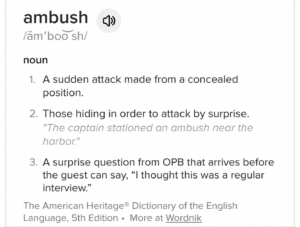 RVC: Before we hit the speed round, I’m trying something new: I asked a couple of your authors to each send in questions of their own. Consider this the Ambush Portion of the interview. First up, Janet Johnson.
CJ: This is very sneaky of you, and I love it.
Janet asks: As an author AND editor, which side do you most identify with, and why? And which is harder for you?
CJ: I identify way more with the editing side of the publishing world. I love helping authors fine-tune their story and bring their vision to life. I mentioned earlier that everyone thinks they can write a board book or a picture book, but it is a true art to do it well. The creativity, focus, and patience it takes to write a book is much harder for me.
Janet also asks: What’s that extra something that makes you want to acquire a manuscript? Is it even definable for you?
CJ: I wish it was easy to define, but a lot of time it comes down to a gut feeling. If I read something and can’t stop thinking about it (or immediately have to show another editor), that’s it. It also depends on trends, list building, and market saturation.
RVC: Next, from Katy Hudson—
Katy asks: At what point of reading a manuscript can you tell it’s going to be a story you can take to acquisition?
CJ: I usually know within the first few lines. If it doesn’t grab me right away, why keep going? For picture books, you only have a few hundred words. Each one needs to count.
Katy also asks: How annoying/distracting is bad spelling and grammar for you? (Asking for a friend.)
CJ: HA! I’m not distracted by bad spelling or grammar, as those things are easily fixed. I’m more of a “story first” editor (which may not be comforting to some authors).
RVC: Alright, Christianne–ambush over! It’s FINALLY time for the Speed Round. Zippy-quick questions, snappy-fast answers, please. Ready?
CJ: Always.
RVC: Manuscript-reading snack of choice?
CJ: Diet Coke and whatever I can find in the pantry, as I work from home most days and am much too lazy to go out and get anything special.
RVC: Best thing about Mankato that outsiders never guess?
CJ: It has beautiful parks and biking paths. It also feels like a small town but has all the “big-city” amenities you need. Plus, it’s in Minnesota, which is an incredible state.
RVC: Caleb Williams. Great quarterback or the greatest quarterback?
CJ: Great quarterback—for now.
RVC: A phrase you overuse in editorial letters?
CJ: “Unfortunately, this isn’t the right fit for our list.” It’s not a lie, but it means a lot of different things.
RVC: One recent picture book that deserves way more noise?
 CJ: I’m going to be selfish and promote two recently published Capstone books that I absolutely love. The Very Eager Evergreen by Stef Wade and Ride by Bao Phi. These two books couldn’t be more different, but each one will give you all the feels.
RVC: One word every picture book writer should hear more often?
CJ: Cut. In first drafts, I move a lot of main text to art notes. Show—don’t tell. The audience has a short attention span. Every word needs to make an impact. Read the story out loud. Cut where you can.
RVC: Complete the sentence: “Christianne Jones is an editor who…”
CJ: … really cares about making your vision come to life and will probably send you too many emails (and talk way too much if you make the mistake of calling).”
RVC: Thanks so much, Christianne! This was top shelf, without a doubt.

 Bonaparte Falls Apart

 I Want to Be in a Scary Story





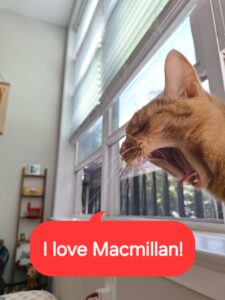
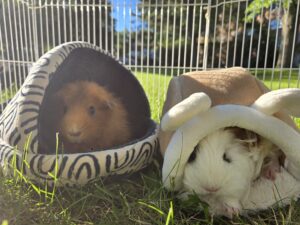 Everybody should get at least two—they’re herd animals. And they’re wasted on children. Do not throw them in a classroom. Be an adult. Get a couple of guinea pigs.
 The Pigeon


